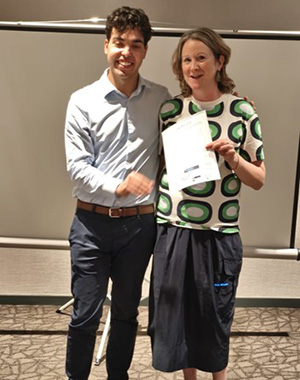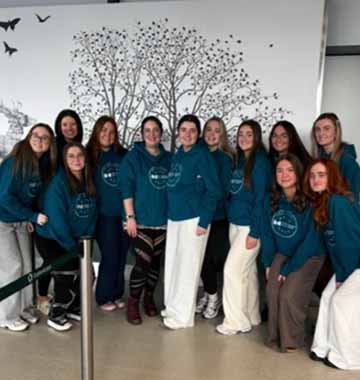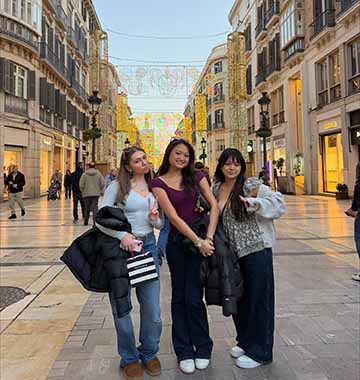
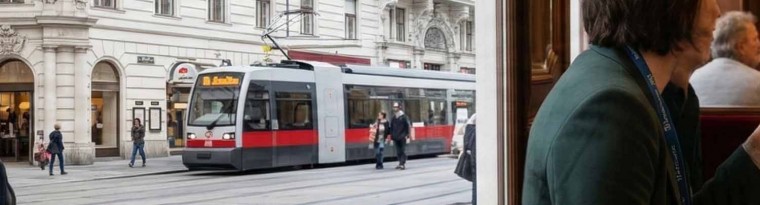
Spending a week in Vienna as part of an Erasmus+ Staff Training programme is not something I would have imagined ticking off in February, but that is exactly where I found myself, along with my colleagues Ed Jennings and Maria Achtida from Dublin College Blackrock. For five days we focused on Managing a Diverse Classroom. The training was hosted in Deutsch Akademie and brought together eight educators from across Europe - three from a primary school in Germany, one from an English language school in Spain, one from an English language school in Greece, and the three of us from Ireland. It was a wonderfully varied group, and that diversity of background and experience turned out to be one of the most valuable parts of the week.
Universal Design for Learning (UDL)
Monday was dedicated to Universal Design for Learning, and for me it was a welcome and timely refresher. I had prior knowledge of UDL, but the session gave me the opportunity to expand on that and look at it with fresh eyes. What was particularly interesting was hearing how colleagues from different countries and different educational contexts approach UDL in practice. The same principles land very differently depending on whether you are teaching primary school children in Germany or adult learners in a Further Education setting in Ireland.
Project-Based Learning (PBL)
Tuesday brought a deep dive into Project-Based Learning, and this session sparked some of the most useful conversations of the week. One idea that really stayed with me was the value of asking students to reflect mid-assignment, rather than waiting until the end. As teachers, reflection is something we do automatically, after every class, every lesson, every interaction. For students, reflection generally only occurs once they receive their grade. Encouraging reflection earlier in the process is something I can see genuinely changing how students engage with their work. My colleagues offered some practical suggestions on how to build this into existing assignments without it feeling like an added burden.
Teaching adults in a college setting does come with its own particular challenge here. If students do not see an activity contributing directly to their grade, engagement can drop off quickly. While we cannot always implement PBL in its purest form, the week reinforced that adapting these approaches for our context does not mean losing the energy or the creativity behind them. One of the biggest takeaways from talking to colleagues across Europe was simply this, we can make our classes more fun. Get people out of their seats, building in movement and interaction. These things matter, even with adult learners.
A Visit to Wien Museum
Wednesday took us outside the classroom and into the Wien Museum, where we were given a task that turned out to be surprisingly thought-provoking. We had to locate within the museum a piece of propaganda, an example of fake news, and something that illustrated how different cultures have influenced one another over time. While this sounds abstract, it was a clever exercise that brought the week’s themes into a real-world context and got us thinking about digital critical thinking in a very tangible way. The discussion that followed on Thursday tied it all together, connecting what we had seen in the museum to how we approach media literacy and critical thinking in our own classrooms.
Exploring Vienna Beyond the Classroom
One of the unexpected highlights of the week was discovering Vienna’s café culture. Our favourite spot quickly became Café Eiles, a traditional Viennese coffee house with an atmosphere that encourages you to slow down and stay a while. Over the course of the week, we sampled some of Austria’s most iconic dishes. Tafelspitz, the classic Viennese boiled beef served with apple-horseradish and chive sauces, which gave us a true taste of local tradition. If Tafelspitz introduced us to Austria’s savoury traditions, Sachertorte quickly became my personal highlight of the week.
Those evenings in Café Eiles were more than just meals. They became informal extensions of the training week, a space where professional conversations blended naturally with laughter, cultural exchange, and shared stories from our classrooms back home.
AI Tools and Digital Critical Thinking
The session on AI tools was the one that sparked the most energy in the room. The potential to save time in lesson planning while also making content more interactive and engaging was something that resonated with everyone present. It is an area that is moving so quickly, and having the space to explore it together was genuinely useful. It is the kind of conversation that is hard to have in isolation and much richer when you are in the room with colleagues from different systems and different approaches.
Learning Across Cultures
Throughout the week, we were placed into different breakout groups each day, always with a different mix of participants. This was one of the most effective structural decisions of the programme. By the end of the week, we all had meaningful conversations with everyone in the room. The range of perspectives on even the most familiar topics was striking. Seeing how different educational cultures approach the same challenges whether that is student motivation, classroom management, or the integration of technology, gave me a lot to think about and brought a new dimension to ideas I thought I already understood well.
Final Thoughts
Erasmus+ staff training weeks offer something that is genuinely difficult to replicate in any other format. Dedicated time, away from your usual environment, to think carefully about your practice alongside colleagues who are asking the same questions from entirely different starting points. Our week in Vienna was a reminder of how much we can learn from one another, and how much common ground exists across very different educational contexts. I am returning with a refreshed perspective on UDL and PBL, some very practical ideas to bring into the classroom, and, perhaps most importantly, a renewed enthusiasm for the work.